Sustainable Glamping: Eco-Friendly Adventures
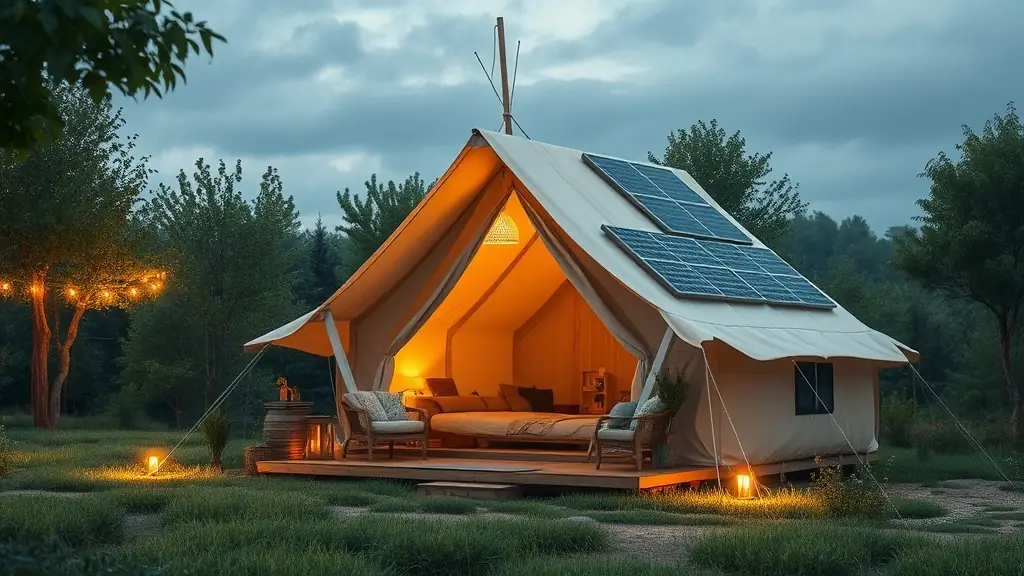
For years, the hospitality industry approached outdoor luxury as a purely aesthetic endeavor. The original iteration of « glamping » often amounted to little more than a spacious canvas tent furnished with a high-thread-count bed and a decorative rug. The operational reality behind these sites, however, frequently relied on diesel generators, single-use plastics, and poorly managed waste systems that contradicted the core appeal of the wilderness.
Today, the landscape of high-end outdoor tourism has undergone a foundational shift. The focus has moved from visual rusticity to highly engineered, integrated eco-infrastructures. Modern sustainable glamping is a growing sector that allows travelers to enjoy the outdoors while respecting the environment through rigorous operational standards.
- Eco-glamping definition: According to Ecobnb, eco-friendly glamping is defined as « glamorous camping » and a combination of 5-star luxury with rare look accommodation in beautiful sites of nature, allowing guests to be in touch with nature while still enjoying modern comforts.
What Does Operational Integrity Look Like?
This evolution dictates that luxury in 2024 is measured by footprint rather than thread count. The integration of zero-waste micro-grids, closed-loop water systems, and localized supply chains ensures that the glamping experience is both enjoyable and responsible. By embracing a slower pace of life, the modern eco-resort encourages visitors to connect with the environment in a meaningful way, backed by the assurance that the underlying infrastructure actively supports conservation efforts rather than degrading the surrounding habitat.
Key Takeaways
Executive Summary
- Technical Sustainability: Modern eco-glamping has shifted from aesthetic choices to measurable infrastructure, requiring verified use of renewable energy, eco-friendly cleaning agents, and zero-waste management.
- EV Integration: Remote accommodations increasingly mandate robust logistical support. As of 2024, Glampings.com lists 248 glamping accommodations in Belgium, with filters for electric car and e-bike charging stations.
- Platform Verification: Booking directories are gamifying ecological standards, allowing consumers to filter specifically for sustainable measures, localized resources, and habitat preservation.
- Wildlife Coexistence: High-end Belgian sites are demonstrating how to balance dense wildlife proximity with ethical habitat integration without disturbing local fauna.
- Holistic Micro-Grids: European benchmarks in Slovenia showcase the viability of completely integrated resorts featuring on-site agriculture and natural hydro-massage systems.
How Does the Infrastructure of Eco-Luxury Move Beyond the Canvas Tent?
The perception of eco-friendly travel often begins and ends with what the guest can see: a wooden cabin, a canvas dome, or a scenic forest backdrop. However, true sustainability operates almost entirely behind the scenes. It represents a shift from a visual aesthetic to a strict technical checklist. A scenic tent in the woods is merely camping; an eco-luxury destination is a self-sustaining micro-grid designed to operate in harmony with its immediate environment.
What Are the Foundational Pillars of Site Operation?
Look for glamping sites that prioritize sustainable practices at the operational level. The hidden infrastructure—waste management, energy generation, and supply chain logistics—matters far more than the visual « greenness » of a site. Sustainable features commonly available at authentic eco-resorts include the use of renewable energy sources, eco-friendly cleaning products, minimized waste practices, and locally sourced construction materials. These elements work in tandem to create a closed-loop system where the property generates much of its own power and processes its own waste without straining municipal resources.
How Do Material Selection and Waste Reduction Work?
These sites often use locally sourced materials during their initial construction to drastically lower the carbon footprint associated with heavy transport. Once operational, the reliance on biodegradable, non-toxic cleaning products prevents soil and local watershed contamination. By choosing a sustainable glamping experience anchored in these infrastructural realities, visitors contribute directly to the preservation of natural resources and support environmentally conscious businesses. In modern settings, luxury is often defined by the invisible, highly technical systems that allow guests to exist within nature without leaving a permanent mark.
What Are the Logistical Realities of Sustainable Transport?
The intersection of high-end eco-tourism and modern transportation presents a unique logistical challenge. Eco-glamping sites are, by definition, isolated. They sit deep within forests, atop remote hills, or nestled in private rural estates. For years, reaching these pristine environments required a reliance on fossil-fuel-powered vehicles, creating a paradoxical situation where accessing an eco-friendly resort actively generated greenhouse gas emissions.
Why Build an EV-Ready Wilderness?
To resolve this contradiction, forward-thinking operators are transforming their parking facilities into decentralized energy hubs. As of 2024, Glampings.com lists 248 glamping accommodations directly in Belgium, with features notably including charging points for electric cars and electric bicycles. This data indicates a fundamental shift in the hospitality sector: on-site EV infrastructure is no longer an optional luxury perk, but a mandatory baseline for any resort claiming to be sustainable.
How Do Sites Connect Remote Locations?
The integration of EV and e-bike charging stations directly impacts the feasibility of zero-emission travel itineraries. When a site offers high-capacity charging networks powered by their own renewable energy grids (such as on-site solar arrays or wind turbines), the entire journey becomes part of the eco-tourism loop. Guests can navigate rural Belgian landscapes via e-bike, relying on the glamping site to provide the necessary logistical backbone. This development ensures that the remote nature of these accommodations does not become a barrier to sustainable transport, but rather an integrated node in a broader, green transit network.
How Do Booking Platforms Standardize Sustainable Features?
As the demand for eco-luxury grows, the hospitality market faces a critical issue: verifying sustainability claims. To combat « greenwashing, » prominent booking directories have evolved from simple aggregators into vetting platforms. They employ specific filtering systems that gamify and standardize ecological features, allowing consumers to actively select sites based on verifiable logistical criteria.
How Do Different Platforms Compare?
The table below outlines how three leading platforms servicing the region categorize and filter their accommodations, ensuring travelers can effectively audit a site’s infrastructure before booking.
| Platform | Belgian Listing Focus | Eco & Logistical Filter Criteria |
|---|---|---|
| Campspace | Broad outdoor stays and micro-camping | Filters for specific sustainable measures, campfire availability, localized firewood, private locations, and family-friendly infrastructure. |
| Glampings.com | Comprehensive national directory (248 Belgian sites as of 2024) | Focuses on technical mobility infrastructure, filtering for dedicated charging points for electric cars and electric bicycles. |
| LetsGoMyLove | High-end romantic and unique architectural niches | Filters for immersive natural features, dense wildlife proximity, and unique structural integration (e.g., forest cabins, secret caves). |
What Is the Impact of Standardized Filtering?
By implementing these distinct criteria, booking platforms shape the operational standards of the industry. Campspace provides a directory of glampings in Belgium with filters for sustainable measures, campfire, firewood, private location, and family-friendly options, forcing hosts to document their resource management to rank highly. Meanwhile, platforms like LetsGoMyLove list romantic glamping sites in Belgium, including Les Cabanes des Dolimarts and Lodges & Wood Hotel by Forestia, proving that strict ecological vetting can successfully coexist with luxury and highly specific architectural appeal.
How Does the Belgian Approach Integrate Wildlife and Preserve Habitats?
Managing the delicate balance between high-end hospitality and active wildlife preservation is the most complex challenge for remote eco-resorts. Human presence inherently alters local ecosystems, making habitat preservation a critical component of sustainable glamping infrastructure. In Belgium, a new tier of accommodations is demonstrating how to carefully integrate luxury lodging directly into thriving natural habitats without disrupting the local fauna.
How Do Operators Design for Zero Disturbance?
Successful wildlife integration requires architectural restraint and rigorous zoning. Structures must be built around existing migratory paths and feeding grounds. LetsGoMyLove lists romantic glamping sites in Belgium that exemplify this approach, including Les Cabanes des Dolimarts, which features 25 cabins in the forest with a secret cave, earning a guest rating of 4.6/5 as of 2024. The footprint of these cabins is heavily managed to prevent soil compaction and root damage to the ancient woodland.
How Is High-Proximity Fauna Integration Achieved?
The ultimate test of habitat preservation is managing predator-adjacent hospitality safely and ethically. Also featured on LetsGoMyLove is the Lodges & Wood Hotel by Forestia, offering the experience of sleeping among bears and wolves in a park with 300 animals, which boasts a rating of 4.9/5 as of 2024. To achieve this safely, the site’s infrastructure must rely on non-invasive acoustic barriers, elevated walkways, and strict waste containment protocols to ensure human food sources do not contaminate the animals’ diet. This level of operation proves that eco-luxury can provide extreme proximity to nature, provided the underlying infrastructure is designed entirely around the behavioral needs of the resident wildlife.
What Are the Lessons from European Integrated Eco-Villages?
While the Belgian market excels in dense forest integration and EV logistics, the ultimate frontier of sustainable glamping is best observed through a wider European lens. To understand what a fully realized, zero-waste micro-grid looks like, operators often turn to integrated eco-villages that function as completely autonomous ecological systems.
Where Is the Gold Standard of Autonomy?
A prime benchmark is located in Slovenia. Garden Village Bled serves as a comprehensive blueprint for how an eco-resort can completely overhaul its carbon footprint by managing its own natural resources. Garden Village Bled features fruit trees planted throughout the resort, its own herb and vegetable gardens, a restaurant with a river stream flowing through it, and pools with a natural massage waterfall.
How Do Hydrology and Localized Agriculture Function?
This level of integration moves hospitality away from an extraction model to a sustaining model. By utilizing on-site agriculture—growing the exact herbs and vegetables served in their restaurant—the resort eliminates the emissions associated with daily food deliveries.
Furthermore, incorporating the local hydrology directly into the infrastructure alters the energy consumption of the guest stay. A restaurant utilizing a natural river stream for ambient cooling, or pools powered by natural massage waterfalls, bypasses the need for heavy, electrically powered HVAC and water-pump systems.
By comparing local operations against this European blueprint, it becomes clear that the future of eco-luxury relies on building with the landscape’s existing physics and biology, rather than attempting to conquer them with imported technology.
Frequently Asked Questions (FAQ): Vetting Eco-Glamping Sites
How can I verify a site’s renewable energy claims before booking?
Authentic eco-resorts typically display third-party certifications from recognized environmental boards (like Green Key or EU Ecolabel) directly on their websites. Additionally, reputable platforms require hosts to provide photographic proof of their infrastructure—such as solar arrays or biomass boilers—before allowing them to use the « renewable energy » filter on their listing.
Are off-grid glamping sites exempt from standard hospitality safety regulations?
No. While off-grid sites operate independently of municipal water and power lines, they are still strictly bound by national and regional hospitality safety codes. This includes rigorous fire safety protocols, proper ventilation requirements for alternative heating sources (like wood stoves), and strict municipal health inspections for decentralized water filtration and composting sanitation systems.
What constitutes « zero-waste » in remote hospitality settings?
In a remote hospitality context, zero-waste means the property diverts nearly 100% of its refuse away from traditional landfills. This is achieved through a combination of strict purchasing policies (banning single-use plastics from the supply chain), comprehensive on-site composting for organic food waste, and the use of closed-loop greywater systems to safely repurpose wastewater for surrounding vegetation.
Conclusion: What Is the Future of Circular Tourism?
The transition from aesthetic camping to highly engineered eco-luxury demonstrates a maturing hospitality sector. Yet, the evolution of outdoor travel is not stopping at mere sustainability. The upcoming frontier is regenerative tourism—a paradigm where glamping infrastructures are designed not just to minimize human impact, but to actively repair and improve local ecosystems. Future micro-grids will likely focus on biodiversity restoration, utilizing guest revenues to fund local reforestation, rewilding projects, and advanced soil regeneration. As these sophisticated sites continue to develop, the act of booking a luxury stay in the wilderness will transform from a passive vacation into an active investment in environmental healing, ensuring that nature is left fundamentally stronger than before.